Showing posts with label peak oil. Show all posts

Wednesday, September 18, 2013

TTKD Sept 13 Meeting: Fossil Fuels and Alternatives


Fossil Fuels and Alternatives 
Thursday September 19 
7.15pm for a 7.30pm start 
Kenmore Library Meeting Room 

Lloyd Hamilton will present information on fossil fuels, and Will Booth will present information from 350.org on the impact of these fuels and alternatives.

As usual the meeting will be followed by supper and conversation. Please feel free to bring along a plate to share (preferably locally produced or homemade!). No need to RSVP.

Tuesday, May 10, 2011

Electric cars part 2

In my recent post on the Volt and Leaf electric cars I neglected to mention there is already one mass produced electric car on the streets in Australia. The Mitsubishi - iMiev.

The iMiev is similar to the Nissan Leaf in that is it a pure electric vehicle with no internal combustion engine. Similar to the Leaf it gets about ~12o km per charge. Also like the Leaf the iMiev can be both 220V (ie: household electricity) charged or high voltage fast charged.

Doing some comparisons: the iMiev has both a smaller battery pack and a less powerful electric motor than the Leaf, but is quite a bit smaller and lighter overall, which allows it to get a similar range. The Volt is also bigger and heavier than the iMiev, but has a similar sized battery pack since it only runs all electric for ~55km before its backup petrol engine kicks in. Looking at their specs it would seem the iMiev is similar to the Leaf in being ideally suited as a city or commuting car.

The advantage of the iMiev is that it is already available in Oz, at least to lease, while the others don't arrive till next year. As Mitsubishi ramps up production over the next few years we should be seeing of few more of them around.


Thursday, May 5, 2011

Electric cars - An important solution in a world of peak oil.

Last week ABC Catalyst looked at peak oil and how high petrol prices are here to stay. An obvious response to these issues is to make the economy (and the people within it) less dependent on oil by using less of it. This week Catalyst went to America to preview one of the core solutions to this problem - electric cars.

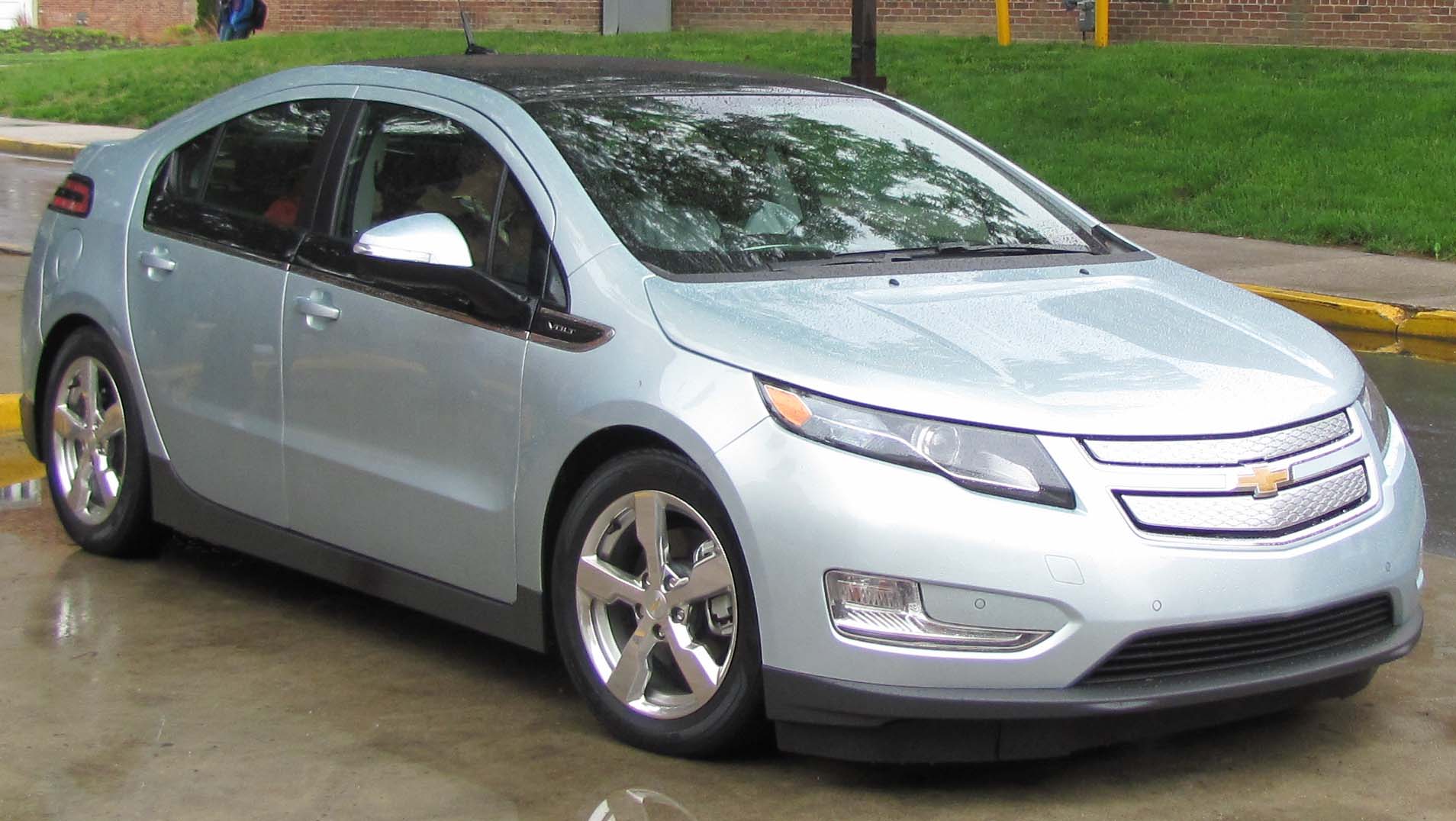
Electric cars have come along way in the past decade or so and two currently on sale in the USA are the Chevy (Holden) - Volt and the Nissan -Leaf. There has been a lot of buzz about these cars, and both have won several "Car of the year awards".

There are a lot of advantages to electric cars, beyond just reducing oil use. Electric motors are much more efficient than petrol engines, so this and the high price of oil make electric cars much cheaper to drive per km. With no tail pipe emissions electric cars help to clean up polluted city air and of course emit no greenhouse gasses. In fact if your electricity comes from renewable sources then they truely are zero emissions vehicles.

So how do they work?

Well the Volt is a plug in hybrid electric vehicle (PHEV). It has a battery which powers an electric motor. In electric only driving it can travel ~55 km on a single charge. Then as the battery gets depleted a small petrol engine starts up which powers an electric generator to keep the car going and give it a total range of ~600km. In this way the Volt eliminates "range anxiety", the fear you'll run out of battery charge and be stuck somewhere. But here's the clever bit, most people drive less than 55km in their daily commute, which means you can charge the battery between commuting and continually run in all-electric mode. Then if you want to drive long distance on the weekend, you still can. The volt plans to be, and is, a replacement for the main family car. Another benefit is the battery can be charged from a normal residential power point, making this process nice and easy.


The LEAF (unlike the Volt) is a pure electric vehicle (PEV), it has no petrol engine at all, instead it has a lot of batteries and an electric engine. Since it is all electric it's battery range is longer than the Volt at ~110 km. Only having one engine (and not being a hybrid) also makes the Leaf cheaper than the Volt. The leaf is ideal for shorter trips or commuting but although the batteries can be high voltage fast charged in ~30minutes it isn't ideal for long trips.

Photo: Tennen-Gas. Permission: cc-by-sa-3.0

Both these cars should be hitting our shores in 2012.

For even more info about these cars, see the wikipedia pages on the Volt and the Leaf

Monday, May 2, 2011

The Oil Crunch - Peak oil on a special edition of Catalyst

The age of cheap, plentiful, oil is over. That's the unmistakable conclusion from last weeks ABC Catalyst program - The Oil Crunch. If you missed it, you can view the program and extended interviews here.

Catalyst went and interviewed the chief economist at the International Energy Agency (IEA), an organisation that advises many countries, including Australia, and which is about as mainstream as you can get on energy issues.

The news was "not very bright". According to Dr Fatih Birol, the IEA's chief economist, world crude oil production peaked in 2006 and;
"Existing fields are declining sharply..... just to stay where we are today, we have to find four new Saudi Arabia's". That is a tall order."

So to underline this point, the IEA now says peak oil (of crude) was likely in 2006. Peak oil doesn't mean that there is no oil left, or even that we have used most of it, just that the amount we can pump every day is in decline.

So what are their projections for the future? Well in the past the IEA were projecting the world could pump 120 million barrels of oil per day by 2030, compared to the ~88 million it pumps today. Nowadays, even under an optimist projection, oil production will only increase to 96 million barrels of oil a day in 2035. There are three important points to be made about this.

1) The only reason oil production can increase in total is due to "unconventional" oil. However much of this is oil made from coal, or extracted from Canadian tars sands. This oil has much higher greenhouse gas emissions that conventional oil and from a global warming perspective is a terrible idea.

2) Some groups such as the Association for the Study of Peak Oil and Gas (ASPO) believe that even these new IEA figures are far to optimistic. They believe that the decline in pumped crude will be much faster, because we simply don't have the ability to bring new oil fields online fast enough to replace the declining existing ones, something that Dr Birol admits is possible. (Prof Kjell Aleklett President of ASPO is also interviewed by Catalyst).

3) Supply and demand.
Under optimistic IEA projections oil supply (by including all sources no matter how polluting) can only increase slightly to 96 million barrels per day in 2035, but oil demand is increasing rapidly, especially in Asia. Both the IEA in their World Energy Outlook and the US Govts' Energy Information Agency (EIA) 2010 Energy Outlook predict demand above this level of supply, with the EIA projecting consumption of liquid fuels to be "110.6 million barrels per day in 2035".

This simply won't work, either the world will have to find huge amounts of extra oil (biofuels?), or there won't be enough oil to meet demand, which will mean high prices and economic disruption. This is the real issue of peak oil, not that oil does peak, but that when it does world demand will still be rising and supply won't be able to keep up. We are left in my opinion with a new economic TINA, reduce our dependence on oil.

As for solutions, well they are out there, this post is long enough already but for a start you might want to check out the next edition of Catalyst where they will be checking out electric cars. While this SMH article foreshadows the forthcoming Beyond Zero Emissions report on a sustainable transport system to follow up their zero carbon power generation plan.

Saturday, July 10, 2010

QLD Electric Vechicle roadmap - call for comments

2010 is the year electric vehicles (EVs) hit the mainstream with EV roll-outs from many of the world biggest car makers.

To this end the Queensland government has issued a discussion paper (don't worry it's really quite short) about how QLD will promote EVs to take advantage of their ability to help reduce pollution and start weaning us off oil. Next they want to know what we think.

According to Kate Jones:

"Priority areas and actions canvassed in the Roadmap include environmental impacts; recharging and electricity grid impacts; standards, planning and regulation; consumer uptake and behaviour change; industry development; and renewable energy"

"I invite all Queenslanders who have an interest in sustainable transport solutions to consider the issues and opportunities identified in this EV Roadmap and provide their comments and ideas on this exciting new technology."

If you want to comment, you can do it here until the 19th of July, the short discussion paper is here. Transition Kenmore will likely provide a comment so if you are part of TTKD feel free to send us an email so we can add your points.

Sunday, June 27, 2010

Renewable Energy Solutions - Online version of Phillip Machanicks talk

The first speaker at our recent meeting on renewable energy solutions was Dr Phillip Machanick.

He has been kind enough to put his talk online at www.scribd.com and I have embedded it below.

Don't forget to check out Phil's blog as well.


Clean Energy Options

Tuesday, June 15, 2010

The future's electric

Or at least it will be if Shai Agassi has his way. Another great TED talk, this time from the CEO of electric car start up Better Place.
2010 marks the launch of a number of plug-in electric cars including the much talked about Chevy Volt and Nissan Leaf. Unlike the major automakers Agassi plans to decrease the cost of electric cars by not requiring car owners to buy the batteries; and increase their convenience by creating battery exchange stations much like petrol stations today.

For more, watch the video...


Saturday, May 15, 2010

Post Peak Living - Peak oil and what it might mean for all of us

Post peak living is a website dedicated to looking at what effects peak oil could have on the economy and our lifestyles and how best we can prepare and adapt to a future with a lot less oil.

The website by André Angelantoni, who also runs online courses on post peak living, contain several videos where André outlines the history of oil, rebuts what he sees as myths around the future supply of oil and also considers the enormous impact passing peak oil could have on our way of life and possible actions we can take.

Importantly our responses to peak oil and climate change are closely linked. A rapid response to climate change and a shift of the economy off fossil fuels would substantially blunt the impact of peak oil. However, since the world is not rapidly responding to either climate change or peak oil, André articulates that he believes we have left it too late to avoid substantial impacts on our economy and living standards.

Of course, even if he is correct, that doesn't mean we are helpless. Noticeably André has been promoting the Transition Movement as a positive way to build community resilience to a post peak world. A reminder to everyone involved in TTKD to keep up their efforts.

The videos Post Peak Living have created are informative and also challenge us to consider impacts of declining oil availability that normally we might not think about. If you have time, follow the link and have a look.

Thursday, April 29, 2010

TED talk from Transition founder Rob Hopkins - Transition to a world without oil

TED talks bring some of the world best thinkers and doers together to share "Ideas worth spreading". Along with its once a year conferences in California and Oxford, TED affiliated events are now held around the world and many talks are put online for all to see.

Here's Rob Hopkins talking about the transition to a world without oil at TEDglobal in Oxford last year.


There are lots of other great TED talks available on the website, many along the Technology, Entertainment, Design subject areas but increasingly others too, such as A Greener Future? I'll be posting some more interesting talks in the near future.

Monday, April 19, 2010

"From oil dependence to local resilience" - In Transition Movie at Transition Kenmore April Meeting:

How are others preparing to face the future?

SEE THE MOVIE:
In Transition
From oil dependence to local resilience

Inspiring examples of everyday people deciding to make a difference right where they live.

WHEN: Wed April 21st 7:30pm
WHERE: Uniting Church Hall
982 Moggill Rd
Kenmore


This month we are watching the movie 'In Transition". It is a great movie to introduce people to the Transition Town concept of living a lower carbon lifestyle in a very positive way, so I am sure you will make your best effort to let friends, family and neighbours know about this event.
See you there.

Wednesday, September 9, 2009

SEQ Transition Towns in the news

Many of you would have caught Graham Readfearn's feature article on the SEQ Transition Town network in yesterdays Courier Mail. For those who didn't you can view the article online at the Courier Mail website.

Readfern also writes the Courier Mail GreenBlog which is well worth a read and currently contains a fairly "robust" discussion of the merits or "lunacy" of the Transition Town Initiatives (depending on whether you think climate change and peak oil are real and serious issues or some sort of plot by Al Gore and UN to take over the world and send us back to the 19th century).

Check it out